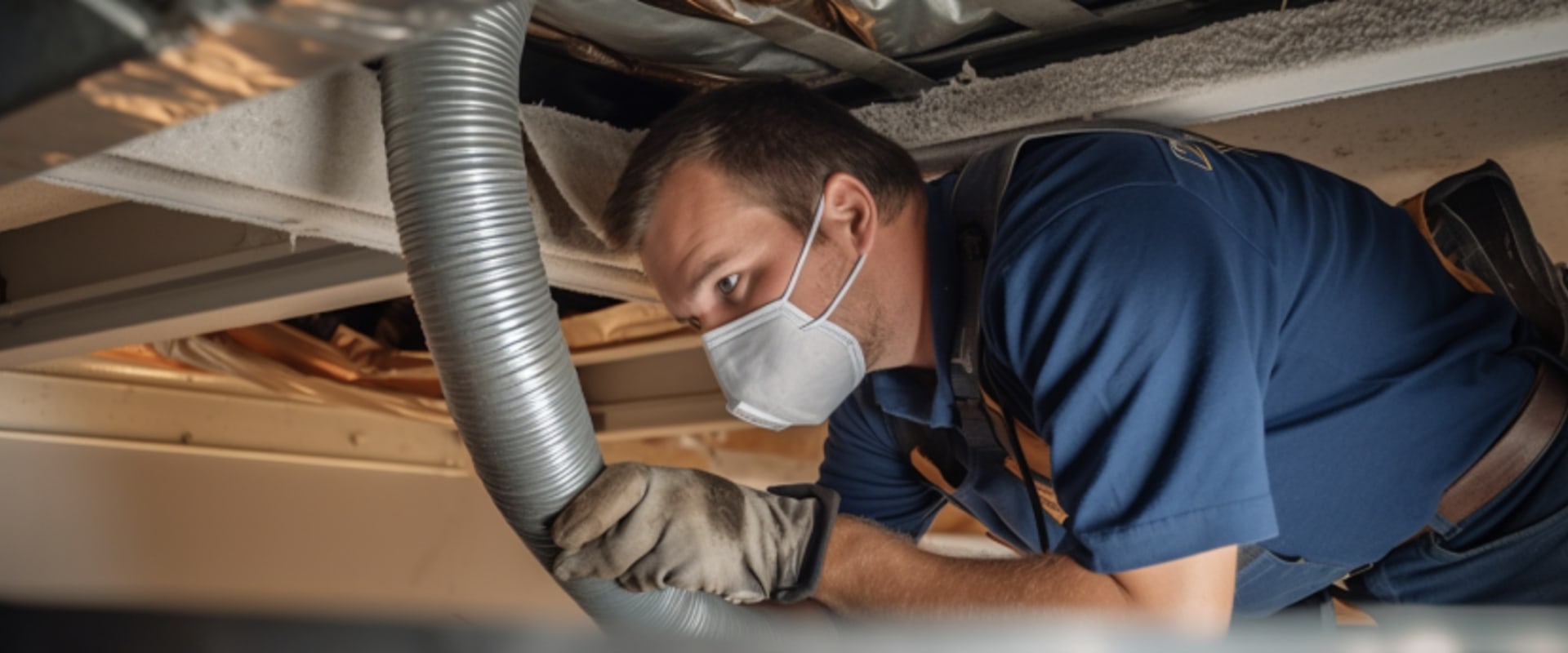
Thirty-five years of summer heat does real damage to the flex duct. In the older homes we service near Plant Street and Tildenville School Road, we often find original ductwork from the mid-1980s still running: outer jackets cracked, connection points pulled loose at the trunk lines, and Central Florida's attic heat accelerating the failure of whatever adhesive held them in place.
By the time the call comes in, one room is running 78 degrees while the rest of the house holds at 72. The system is on. The vents are open. The air just isn't getting there.
In our experience, that's a duct problem, not a thermostat problem or an equipment failure. We see it across Winter Garden homes — in the established neighborhoods west of Downtown and in the Horizon West communities built post-2005. Both have the problem. They just have it for different reasons. HVAC air ductwork repair in Winter Garden is where the fix lives.
TL;DR Quick Answers
Air Duct Repair in Winter Garden
We repair air duct systems in Winter Garden homes across both construction eras — the aging flex duct systems common in neighborhoods near Plant Street and the connection issues we routinely find in Horizon West builds. Most jobs take three to six hours. We inspect first, document what we find, and repair only what the system actually needs.
Top Takeaways
Leaky or disconnected air ducts are one of the most common reasons Winter Garden homes develop uneven temperatures between rooms.
Homes in Horizon West and the older neighborhoods near Plant Street face different duct challenges based on construction era and the materials used.
Florida's year-round HVAC runtime means duct problems compound faster here than in most other states.
Duct repair addresses structural failures in the duct system. Duct sealing addresses gaps and leaks at joints and connections.
A diagnostic inspection is the right first step. Not every airflow problem traces back to the ducts.
A well-sealed duct system doesn't just improve comfort. It reduces strain on the air handler and can meaningfully lower monthly energy costs.
Any contractor doing duct repair work in Florida should hold an active license verifiable through the DBPR at MyFloridaLicense.com.
Why Air Ducts Fail in Winter Garden Homes
Where your home sits in Winter Garden's construction timeline shapes what we find when we open up the attic.
In the established neighborhoods near Downtown and along Tildenville School Road, homes built between the early 1980s and mid-1990s frequently run their original flex duct systems. Those systems are now 30 to 40 years old. The outer jacket degrades, the inner liner develops tears, and connection points pull loose from trunk lines. Central Florida's attic heat accelerates all of it — we've measured attic temperatures above 140 degrees Fahrenheit in July, and that sustained heat wears out adhesive-backed connections and aging duct wrap faster than most homeowners expect.
Horizon West tells a different story. These homes went up quickly during one of Orange County's most active construction periods, and speed sometimes came at the cost of quality connections. We find trunk-to-branch joints that were never fully sealed, flex duct kinked around corners, and return air pathways undersized for the system's actual airflow demands. The duct board used in newer construction holds up well when it's installed correctly. When it isn't, the problems show up fast.
What both eras have in common is continuous HVAC runtime. Florida's climate doesn't offer long stretches of mild weather where a system can rest. A small gap at a joint becomes a significant leak over one or two seasons. By the time the comfort problem appears, the failure has usually been building for a while.
Signs Your Ducts Need Repair, Not Just Cleaning
We get calls that start with 'I think we need duct cleaning,' and after the inspection, the real issue turns out to be structural. Cleaning the ducts without addressing a physical failure won't fix anything.
You likely have a repair issue if:
One or more rooms won't hold the thermostat setting, even with the system running at full capacity.
Your electric bill has increased without any change in your household's usage habits or occupancy.
Airflow from specific registers feels noticeably weak compared to others on the same system.
There's a musty or stale smell from certain vents, which can mean a disconnected section is drawing air from attic space rather than the conditioned return.
You can see a section of flex duct that looks collapsed, kinked, or pulled loose at the air handler or a supply boot.
If those are the symptoms, we look at the full system before making any recommendation.
What the Duct Repair Process Looks Like
We start every duct repair job with an inspection. That means accessing the attic, locating the air handler, and tracing the full supply and return system before we touch anything.
We then identify all failure points: disconnected joints, collapsed sections, compromised duct board, and any areas where return air is pulling from unconditioned space. We document what we find so you can see exactly what needs attention before any work begins.
The repair itself depends on what we find. We reconnect disconnected flex runs and secure them with proper mechanical fasteners and mastic. We reinforce or replace torn duct board sections. We seal gaps at supply boot connections with mastic sealant, not tape — standard tape fails in high-heat environments and we don't use it on any connection point.
After completing repairs, we run the system and check temperatures at each register to confirm the fix held. Most homeowners feel the difference in problem rooms right away.
Duct Repair vs. Duct Sealing: Which Does Your System Need?
Duct repair is structural. It's for systems where sections have physically failed: a run that's come apart at the connection, a section of flex that's collapsed and blocking airflow, or duct board that's deteriorated to the point where it no longer holds an airtight enclosure. You can't seal your way past a duct that's in two pieces.
Duct sealing addresses the smaller gaps and leaks at joints, seams, and register connections. It's typically done with mastic sealant or aerosol-based systems and is appropriate when the duct structure itself is sound but losing conditioned air at connection points.
Many homes need both, in the right order: repair first, then seal. We identify which category each problem falls into during the inspection and give you a clear picture of what each scope of work involves — and why.
How Duct Repair Affects Your Energy Bills
The HVAC system in a typical Central Florida home is the largest single consumer of electricity in the house. When the duct system leaks, the air handler runs longer to compensate for conditioned air that never reaches its destination. In Florida's climate, where a system might run eight or nine months of the year, that compounding inefficiency shows up on the bill.
What we've found in Winter Garden homes is that duct-related energy loss isn't always obvious month to month. Bills creep up gradually as leaks worsen, and homeowners often attribute the increase to rate changes rather than system performance. After duct repairs, many of those same homeowners see a meaningful reduction in monthly utility costs because the system is finally delivering what it's producing.
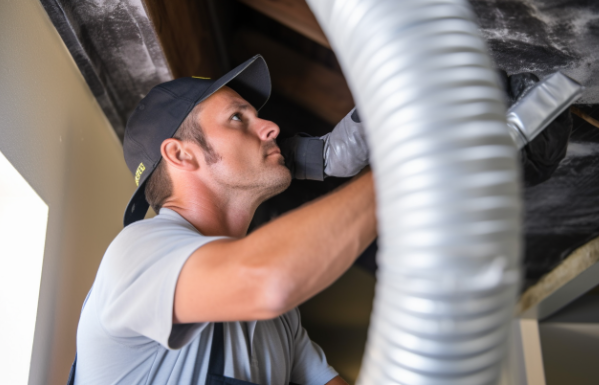
"In the Horizon West homes we service, the most expensive duct problem is almost never the one the homeowner called about — it's the unsealed return junction at the trunk line that's been forcing the air handler to work 20 to 30 percent harder since the day the house was built, quietly running up the Duke Energy bill while everyone assumes the equipment is just getting old."
Essential Resources
1. Learn About Winter Garden Before You Call Anyone
Winter Garden's growth from a citrus town to one of Orange County's fastest-expanding markets helps explain why its housing stock varies so sharply from neighborhood to neighborhood. The Wikipedia entry covers the city's history, its Horizon West development timeline, and the construction eras that drive the duct issues we see most often.
Source: Winter Garden, Florida — Wikipedia
2. Verify Any Duct Repair Contractor's Florida License
Before you schedule work with anyone, look up the contractor's license through the Florida Department of Business and Professional Regulation. It takes under two minutes at MyFloridaLicense.com and it's one of the most useful checks a homeowner can run before any HVAC service call.
Source: MyFloridaLicense.com — Florida DBPR License Verification
3. Find a NADCA-Certified Duct Professional Near You
The National Air Duct Cleaners Association sets the professional standard for duct system work. Their website lets you search for certified technicians by zip code — useful for homeowners in 34787 and the surrounding Winter Garden area who want to confirm credentials before committing to service.
Source: NADCA — National Air Duct Cleaners Association
4. Understand How Duct Leaks Cost You Money
The U.S. Department of Energy's Energy Saver resource explains how leaks in unconditioned spaces affect system performance and what sealing and repair actually accomplish. Worth a read before any HVAC service conversation.
Source: DOE Energy Saver — Minimizing Energy Losses in Ducts
5. What the EPA Says About Indoor Air Quality
The condition of your duct system affects more than comfort. Leaky return ducts pull air from unconditioned attic spaces directly into your living area. The EPA's indoor air quality resource explains why that matters for what your household is breathing every day.
Source: EPA — Introduction to Indoor Air Quality
6. A Florida-Specific Guide to Duct System Performance
The University of Florida IFAS Extension published this guide specifically for Florida homeowners. It covers how duct leakage affects HVAC efficiency in a subtropical climate and what to watch for in homes with aging duct systems — grounded in Florida conditions, not general theory.
Source: UF IFAS Extension — Energy Efficient Homes: The Duct System
7. How to Spot Air Leaks in Your Home
This Department of Energy resource covers practical methods for identifying air leaks, including signs that are easy to miss without professional equipment. A good starting point if you want to understand the scope of the problem before you schedule an inspection.
Source: DOE Energy Saver — Detecting Air Leaks
Supporting Statistics
1. ENERGY STAR puts the average air loss from a typical home's duct system at 20 to 30 percent — lost before conditioned air ever reaches its destination, through leaks, holes, and poorly connected sections. In the Winter Garden homes we inspect, properties with original flex ducts from the 1980s and 1990s routinely test on the higher end of that range.
Source: ENERGY STAR — Duct Sealing | energystar.gov/saveathome/heating-cooling/duct-sealing
2. The EPA reports that Americans spend approximately 90 percent of their time indoors, where concentrations of some pollutants run 2 to 5 times higher than typical outdoor levels. A duct system with disconnected return sections pulls air from unconditioned attic spaces into the living area, and most homeowners never connect the air quality problem to the duct system.
Source: EPA — Indoor Air Quality, Report on the Environment | epa.gov/report-environment/indoor-air-quality
3. Research from the University of Florida IFAS Extension found that ducts leaking just 20 percent of conditioned airflow cause an HVAC system to work 50 percent harder. We've seen that play out directly in Central Florida homes: systems that run nearly year-round absorb the compounding wear in equipment condition and monthly utility costs, long before the homeowner connects the dots.
Source: UF IFAS Extension — Energy Efficient Homes: The Duct System | edis.ifas.ufl.edu/publication/FY1024
Final Thoughts and Opinion
Most Winter Garden homeowners who call us about uneven temperatures are dealing with a duct problem, not an equipment problem. We've said that enough times that it's become one of the clearest patterns in our work here. Replacing the system feels like a guaranteed fix. But a new air handler running through a leaky duct system is still a leaky duct system.
Start with a duct inspection before committing to anything. If the structural problems are isolated, repair is usually straightforward and resolves the comfort issue right away. If the system has deteriorated to the point where piecemeal repair doesn't make sense, we'll tell you that too.
What we won't do is recommend work your home doesn't need. In our experience, an honest assessment up front saves everyone time, money, and frustration — and in Winter Garden's two distinct construction eras, knowing which category your home falls into shapes everything about what the right repair looks like.

Frequently Asked Questions
How do I find a reputable HVAC duct repair company in Winter Garden?
Start by verifying the contractor's license through the Florida DBPR at MyFloridaLicense.com. From there, look for NADCA certification, which confirms the technician has met the professional standards set by the National Air Duct Cleaners Association. We also recommend asking for a written inspection report before work begins so you know exactly what the proposed repairs address and why.
What happens if I ignore a leaking air duct?
A leaking duct system doesn't fix itself. Small disconnects widen over time, insulation degrades, and the HVAC system compensates by running longer cycles to hold your set temperature. That added strain shortens the service life of the air handler and compressor, drives up monthly electric bills, and can pull air from attic spaces into your home's living areas. Catching duct problems early costs less, almost every time, than waiting until the equipment has absorbed the wear.
Is duct repair covered by homeowner's insurance in Florida?
Typically, no. Standard homeowner's insurance policies cover sudden, accidental damage, not wear-related deterioration, which is the most common cause of duct failure. Some home warranty programs include partial coverage for HVAC components, but coverage details vary significantly by policy. Review your specific policy or contact your provider before assuming coverage applies.
Can I repair my air ducts myself?
Some minor repairs are within reach for experienced DIYers, such as resecuring a loose register boot or applying mastic to an accessible joint. For attic ductwork, disconnected trunk line sections, or any return air system work, professional service is the right call. Improperly repaired duct sections can create pressure imbalances that pull air from unintended spaces, which creates both efficiency and air quality problems. Florida's attic conditions make DIY attic work genuinely dangerous during warmer months.
How often should air ducts be inspected in a Winter Garden home?
We recommend a duct inspection every three to five years for most Winter Garden homes, or sooner if you notice warning signs: rising energy bills, rooms that won't hold temperature, visible dust accumulation at registers, or musty odors from supply vents. Homes with original ductwork from the 1980s or early 1990s benefit from more frequent checks, given the age of the materials and the years of subtropical conditions the system has absorbed.
Better Air Distribution Starts With Knowing What Your Ducts Are Actually Doing
Schedule a diagnostic duct inspection with our team and find out exactly what's standing between your Winter Garden home and consistent comfort in every room.
Here is the nearest branch location serving the Fort Lauderdale FL area…
Filterbuy HVAC Solutions - Pompano Beach
2521 NE 4th Ave, Pompano Beach, FL 33064, United States
(754) 484-4453